

You’ve typed “thanks for checking in” so many times it barely feels like gratitude anymore. It’s polite, sure, but it’s also the default reply everyone reaches for when they don’t want to think too hard about wording. If you’re emailing a client or your boss, that default can start to feel a little flat.
The truth is, thanks for checking in works fine for casual chats, but it doesn’t always match the moment. A client who followed up twice on a delayed invoice deserves something more specific than your boss checking if you’re free for a call.
This guide gives you 30+ alternatives, sorted by tone, so you always know exactly which one to reach for.
Quick Answer Table
| Alternative | Tone | Best For |
| I appreciate your follow-up | Formal | Clients, senior management |
| Thank you for touching base | Semi-formal | Colleagues, internal teams |
| I appreciate you reaching out | Formal | Clients, new contacts |
| Thank you for your prompt attention | Formal | Time-sensitive client matters |
| I value your continued follow-up | Formal | Long-term projects, stakeholders |
| Thank you for keeping in touch | Warm | Ongoing professional relationships |
| I appreciate your diligence in following up | Formal | Managers, detail-heavy projects |
| Thanks for the update | Casual | Team chats, quick replies |
| I’m grateful for your concern | Warm | Personal/health-related check-ins |
| Appreciate you checking on this | Casual | Coworkers, informal Slack messages |
When to Use Formal Alternatives
The right phrase depends on who you’re talking to and what’s at stake.
Clients: Stay formal. Use phrases like “I appreciate your follow-up” or “Thank you for your prompt attention.” Clients judge your professionalism from your wording, so keep it polished and specific.
Managers or senior leadership: Match their tone. If your manager is formal, mirror that with “I value your continued follow-up.” If they’re more relaxed, “Thanks for checking in on this” still works fine.
Colleagues: Semi-formal is safe. “Thank you for touching base” or “Appreciate you checking on this” sounds professional without feeling stiff.
Friends or informal contacts: Skip the corporate phrasing entirely. “Thanks for checking on me” or “Appreciate you asking” feels natural and doesn’t come off as distant.
Quick rule: The more senior or unfamiliar the contact, the more specific and formal your phrase should be.
Read More: 45 Best Ways to Say “Good Afternoon” (Formal, Casual & Text-Friendly)
30 Alternatives, Grouped by Category
Formal / Professional
1. I appreciate your follow-up
- Meaning: Thanks someone for reconnecting on a pending matter.
- Definition: A polished way to acknowledge that someone followed up on a topic.
- Detailed Explanation: This works best when a client or manager circles back on something you owe them. It signals you noticed their effort without sounding stiff.
- Scenario Example: “I appreciate your follow-up on the contract details, Sarah.”
- Best Use: Client emails, project updates
- Tone: Formal, polished, respectful
2. Thank you for your prompt attention
- Meaning: Acknowledges someone responded quickly to a request.
- Definition: A formal way to recognize speed and responsiveness.
- Detailed Explanation: Use this when timing mattered. It tells the other person their quick action didn’t go unnoticed, which builds trust in high stakes situations.
- Scenario Example: “Thank you for your prompt attention to the invoice issue.”
- Best Use: Time sensitive client or vendor matters
- Tone: Formal, efficient, grateful
3. I value your continued follow-up
- Meaning: Recognizes ongoing, repeated effort to stay updated.
- Definition: A formal phrase for long term engagement, not a one time check in.
- Detailed Explanation: Ideal for projects that span weeks or months where someone keeps checking on progress. It shows you see the pattern, not just a single message.
- Scenario Example: “I value your continued follow-up throughout this quarter’s rollout.”
- Best Use: Long term projects, stakeholder updates
- Tone: Formal, appreciative, professional
4. Thank you for your inquiry
- Meaning: A formal acknowledgment of someone’s question or interest.
- Definition: Standard business phrasing for responding to a query.
- Detailed Explanation: Common in customer service or B2B communication. It keeps things neutral and businesslike without extra warmth.
- Scenario Example: “Thank you for your inquiry regarding our pricing structure.”
- Best Use: Customer service, sales emails
- Tone: Formal, neutral, businesslike
5. I appreciate your attention to this matter
- Meaning: Thanks someone for focusing on a specific issue.
- Definition: A respectful way to close a formal message.
- Detailed Explanation: Works well at the end of an email when you want to sound courteous without repeating “thanks for checking in” again.
- Scenario Example: “I appreciate your attention to this matter and look forward to your reply.”
- Best Use: Formal emails, closing lines
- Tone: Formal, respectful, composed
6. I appreciate your diligence in following up
- Meaning: Recognizes someone’s thoroughness or persistence.
- Definition: A formal compliment tied to effort, not just timing.
- Detailed Explanation: Use this for someone who has followed up more than once on a detail heavy task. It rewards persistence without sounding sarcastic.
- Scenario Example: “I appreciate your diligence in following up on the compliance paperwork.”
- Best Use: Managers, detail heavy projects
- Tone: Formal, respectful, precise
7. Thank you for your continued support and follow-up
- Meaning: Combines gratitude for both help and communication.
- Definition: A formal phrase that covers two things at once, support and follow up.
- Detailed Explanation: Best used with stakeholders or partners who’ve been consistently involved, not just checking in once.
- Scenario Example: “Thank you for your continued support and follow-up during the transition.”
- Best Use: Stakeholders, long term partners
- Tone: Formal, warm, professional
8. I’m grateful for your follow-up
- Meaning: A slightly softer, more personal formal thanks.
- Definition: Similar to “I appreciate,” but with a touch more warmth.
- Detailed Explanation: Use when you want formality but not coldness, such as replying to a senior colleague you have some rapport with.
- Scenario Example: “I’m grateful for your follow-up on the budget approval.”
- Best Use: Senior colleagues, semi close professional ties
- Tone: Formal, sincere, warm
9. Thank you for reaching out
- Meaning: A universal formal thanks for initiating contact.
- Definition: Acknowledges someone made the first move to connect.
- Detailed Explanation: This is the safest, most versatile formal phrase on this list. It fits almost any professional context without risk.
- Scenario Example: “Thank you for reaching out about the partnership opportunity.”
- Best Use: New contacts, general professional email
- Tone: Formal, safe, versatile
10. I appreciate you reaching out
- Meaning: Personalizes the thanks by directly addressing the sender.
- Definition: A slight variation of “thank you for reaching out,” more direct.
- Detailed Explanation: Use this when you want the message to feel personally addressed rather than templated, especially in one on one client threads.
- Scenario Example: “I appreciate you reaching out with your concerns, and I’ll address them today.”
- Best Use: Client concerns, direct replies
- Tone: Formal, direct, considerate
Semi-Formal / Workplace
11. Thank you for touching base
- Meaning: Acknowledges a casual but professional check in.
- Definition: A common workplace phrase for staying updated on something.
- Detailed Explanation: This is the go to phrase for internal team communication. It feels professional but not stiff, perfect for daily work exchanges.
- Scenario Example: “Thank you for touching base before the client call.”
- Best Use: Internal teams, project check ins
- Tone: Semi formal, friendly, direct
12. I appreciate you checking on this
- Meaning: Thanks someone for verifying or reviewing a specific item.
- Definition: A semi formal phrase focused on a task, not a relationship.
- Detailed Explanation: Use this when someone confirms a detail for you, like a deadline or a document status. It’s specific and to the point.
- Scenario Example: “I appreciate you checking on this before we submit the report.”
- Best Use: Task confirmations, coworker replies
- Tone: Semi formal, specific, polite
13. Thank you for keeping in touch
- Meaning: Recognizes ongoing communication over time.
- Definition: A relationship focused phrase, not a one off thanks.
- Detailed Explanation: Best for people you interact with regularly, like a long term vendor or a colleague from another department. It builds continuity.
- Scenario Example: “Thank you for keeping in touch throughout the merger process.”
- Best Use: Ongoing professional relationships
- Tone: Semi formal, warm, steady
14. I appreciate your effort to check in
- Meaning: Acknowledges the initiative behind the check in, not just the message.
- Definition: A semi formal phrase that credits action over words.
- Detailed Explanation: Use this when someone went out of their way to follow up, such as checking in during a busy week or after hours.
- Scenario Example: “I appreciate your effort to check in despite the tight deadline.”
- Best Use: Busy periods, extra effort situations
- Tone: Semi formal, appreciative, genuine
15. Thank you for your proactive follow-up
- Meaning: Praises someone for following up before being asked.
- Definition: A phrase that highlights initiative rather than just responsiveness.
- Detailed Explanation: Great for recognizing team members or vendors who don’t wait to be chased for updates. It reinforces good habits.
- Scenario Example: “Thank you for your proactive follow-up on the shipment delay.”
- Best Use: Vendors, proactive team members
- Tone: Semi formal, encouraging, professional
16. I appreciate your prompt attention
- Meaning: Thanks someone for responding quickly within a workplace context.
- Definition: A semi formal version of recognizing responsiveness.
- Detailed Explanation: Slightly less formal than its client facing counterpart, this fits internal emails where speed mattered but the tone can stay relaxed.
- Scenario Example: “I appreciate your prompt attention to the server issue this morning.”
- Best Use: Internal urgent requests
- Tone: Semi formal, efficient, grateful
17. Thank you for following up
- Meaning: A direct, no frills thanks for a follow up message.
- Definition: The simplest semi formal acknowledgment available.
- Detailed Explanation: Use this when you don’t need extra warmth, just a clean and quick acknowledgment, like replying to a status update request.
- Scenario Example: “Thank you for following up, the report is attached.”
- Best Use: Quick replies, status updates
- Tone: Semi formal, brief, clear
18. I value your follow-up
- Meaning: Signals that the follow up mattered to the outcome.
- Definition: A semi formal phrase that adds a bit of weight to a routine check in.
- Detailed Explanation: Use this for a colleague whose follow up actually changed something, like catching an error or reminding you of a deadline.
- Scenario Example: “I value your follow-up, it helped us catch the mistake in time.”
- Best Use: Colleagues, error catching situations
- Tone: Semi formal, sincere, direct
19. Thank you for the update
- Meaning: A simple thanks for new information shared during a check in.
- Definition: Focuses on the content shared, not the act of checking in itself.
- Detailed Explanation: Use this when someone’s check in included new details you needed, like a project status or a schedule change.
- Scenario Example: “Thank you for the update, I’ll adjust the timeline accordingly.”
- Best Use: Status reports, project updates
- Tone: Semi formal, practical, neutral
20. I appreciate the heads up
- Meaning: Thanks someone for giving advance notice.
- Definition: A semi formal, slightly casual way to acknowledge a proactive alert.
- Detailed Explanation: Best for situations where someone warned you about something before it became a problem, like a delay or a change in plans.
- Scenario Example: “I appreciate the heads up about the schedule change.”
- Best Use: Team communication, advance notices
- Tone: Semi formal, casual, grateful
Warm & Personal
21. I’m grateful for your thoughtfulness
- Meaning: Thanks someone for the care behind their check in, not just the message itself.
- Definition: A warm phrase that focuses on emotional intent rather than professional duty.
- Detailed Explanation: Use this when someone checks on you during a hard time, like after an illness or a stressful week. It shows you noticed the care, not just the words.
- Scenario Example: “I’m grateful for your thoughtfulness during my recovery.”
- Best Use: Health related check ins, personal support
- Tone: Warm, sincere, heartfelt
22. Your concern means a lot to me
- Meaning: Acknowledges that someone’s worry or care had a real emotional impact.
- Definition: A personal way to thank someone for checking on your wellbeing.
- Detailed Explanation: This fits close colleagues or friends who reached out after something difficult happened, like a loss or a rough patch at work.
- Scenario Example: “Your concern means a lot to me, thank you for asking.”
- Best Use: Close colleagues, personal difficulties
- Tone: Warm, personal, appreciative
23. Thank you for staying in touch
- Meaning: Recognizes someone’s effort to maintain the relationship over time.
- Definition: A warm phrase for consistent, ongoing contact rather than a single message.
- Detailed Explanation: Best for mentors, former coworkers, or long term contacts who check in periodically even without a specific reason.
- Scenario Example: “Thank you for staying in touch after I switched teams.”
- Best Use: Mentors, former colleagues, long term contacts
- Tone: Warm, relational, genuine
24. It’s kind of you to ask
- Meaning: A gentle acknowledgment of someone’s politeness in checking on you.
- Definition: A soft, personal way to accept someone’s concern.
- Detailed Explanation: Use this when someone asks how you’re doing in a caring, low key way, like a coworker checking in after a busy week.
- Scenario Example: “It’s kind of you to ask, I’m doing much better now.”
- Best Use: Casual check ins, wellbeing questions
- Tone: Warm, gentle, sincere
25. I truly appreciate you thinking of me
- Meaning: Thanks someone for remembering or prioritizing you during their own busy schedule.
- Definition: A warm phrase that highlights being remembered, not just contacted.
- Detailed Explanation: Fits situations where someone reached out despite having a lot going on themselves, showing the gesture felt intentional.
- Scenario Example: “I truly appreciate you thinking of me during such a hectic week.”
- Best Use: Friends, supportive coworkers
- Tone: Warm, personal, touched
Casual
26. Thanks for checking on me
- Meaning: A simple, everyday thanks for someone’s concern.
- Definition: The casual, direct version of the original phrase.
- Detailed Explanation: Works fine in texts or Slack messages with people you’re comfortable with. No need to dress it up here.
- Scenario Example: “Thanks for checking on me, I’m doing okay!”
- Best Use: Friends, close coworkers, texts
- Tone: Casual, friendly, easygoing
27. Appreciate you asking
- Meaning: A short, informal way to acknowledge someone’s question about you.
- Definition: A quick casual thanks without extra explanation.
- Detailed Explanation: Great for chat apps where you want to reply fast without sounding too formal or distant.
- Scenario Example: “Appreciate you asking, things are finally calming down.”
- Best Use: Slack, texts, quick replies
- Tone: Casual, relaxed, brief
28. Thanks for the check in
- Meaning: A laid back nod to someone’s message.
- Definition: A casual restatement of “checking in,” used almost interchangeably.
- Detailed Explanation: Use this with people you talk to often, where formality would actually feel out of place.
- Scenario Example: “Thanks for the check in, we’re on track for Friday.”
- Best Use: Regular team chats, informal updates
- Tone: Casual, breezy, direct
29. Good looking out
- Meaning: Thanks someone for watching out for you or giving a heads up.
- Definition: A very informal, friendly way to acknowledge someone’s care or alert.
- Detailed Explanation: Best for close coworkers or friends, especially when the check in prevented an issue, like a reminder or a warning.
- Scenario Example: “Good looking out, I almost forgot about that deadline.”
- Best Use: Close coworkers, casual reminders
- Tone: Casual, appreciative, friendly
30. You’re a star for checking in
- Meaning: A playful, upbeat thanks that goes beyond a simple acknowledgment.
- Definition: A casual compliment wrapped into a thank you.
- Detailed Explanation: Use this with people you have an easy, friendly rapport with, when you want to add a bit of warmth or humor.
- Scenario Example: “You’re a star for checking in, means a lot.”
- Best Use: Friends, informal team culture
- Tone: Casual, playful, warm
Full Email / Message Templates
Ready to copy, adjust the names and details, and send.
1. Client Follow-Up
Subject: Re: Project Status Update
Hi Sarah,
I appreciate your follow-up on the timeline details. We’re on track to deliver the first draft by Thursday, and I’ll share the updated schedule with you by end of day tomorrow.
Thank you again for staying on top of this.
Best, hussain
2. Boss Check-In
Subject: Re: How’s the report coming along?
Hi ali,
Thank you for checking in. The report is about 80% done, and I expect to have it finalized by Wednesday morning. I’ll flag you immediately if anything changes on that timeline.
Thanks for your patience, aslam
3. Sick Leave Reply
Hi hafsa,
I’m grateful for your thoughtfulness in checking on me. I’m feeling much better and plan to be back at my desk on Monday. I’ll catch up on anything I missed then.
Thanks again for reaching out, ayan
4. Project Update Follow-Up
Subject: Re: Quick Update Needed
Hi Team,
Thank you for touching base before the client call. Here’s where things stand: development is complete, QA wraps up today, and we’re set to launch Friday as planned.
Let me know if you need anything else before the call, Dana
5. Networking Follow-Up
Subject: Re: Great Connecting at the Conference
Hi zain,
I appreciate you reaching out after the conference. I’d love to continue the conversation about potential collaboration. Are you free for a quick call next week?
Looking forward to it, zoya
6. Vendor/Proactive Update
Subject: Re: Shipment Delay Notice
Hi hammad,
Thank you for your proactive follow-up on the shipment delay. We’ve adjusted our internal timeline accordingly and don’t foresee any issues on our end. Appreciate the heads up.
Best, hassan
How to Respond When Someone Says It to You
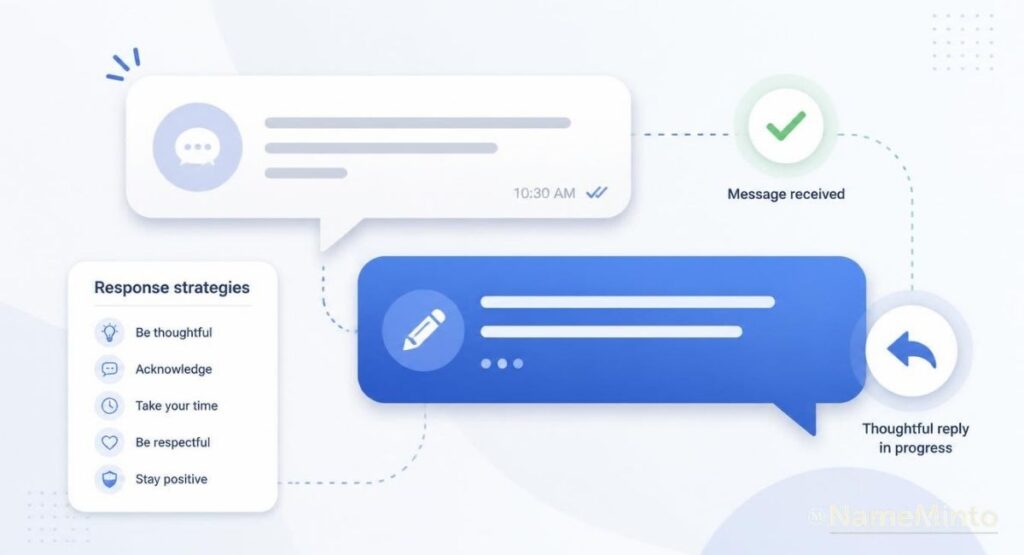
Sometimes you’re on the receiving end, someone thanks you for checking in, and you need a reply that keeps the conversation natural instead of just saying “no problem.”
“My pleasure, always happy to help.” Use this when you want to sound warm and available, especially with clients or people you support regularly.
“Of course, just wanted to make sure everything’s on track.” Fits situations where your check in was task related, like a project deadline or a pending decision.
“Anytime, that’s what I’m here for.” Works well with team members or direct reports. It reinforces that checking in is part of your role, not an inconvenience.
“Glad I could help, let me know if anything else comes up.” A good closer when the conversation might continue, leaves the door open without forcing more back and forth.
“No problem at all, happy to stay in the loop.” Best for ongoing projects where you’ll likely be checking in again down the line.
Quick tip: Match their tone. If they thanked you formally, reply formally. If they were casual, don’t overdo it with a stiff response, it’ll feel mismatched.
6. Common Mistakes to Avoid
Using the same phrase every time.
If you reply with “thanks for checking in” to every email, it starts to feel automatic. Rotate your phrasing based on who you’re talking to.
Being too formal with close colleagues.
“I appreciate your diligence in following up” sounds odd in a quick Slack reply to someone you talk to daily. Match the channel, not just the relationship.
Being too casual with clients or leadership.
“Thanks for checking on me” might land fine with a friend, but it can undercut your professionalism in a client email. Save casual phrases for casual contexts.
Ignoring the effort behind the check in.
A generic “thanks” misses the point when someone went out of their way, followed up twice, or reached out during a busy period. Acknowledge that specifically when it applies.
Overexplaining your response.
You don’t need three sentences to say thanks. A short, clear acknowledgment followed by the actual update is more useful than padding.
Sounding robotic instead of genuine.
Phrases like “I value your follow-up” work only if they sound like you mean them. If it feels copy pasted, the reader will notice.
Cultural Note
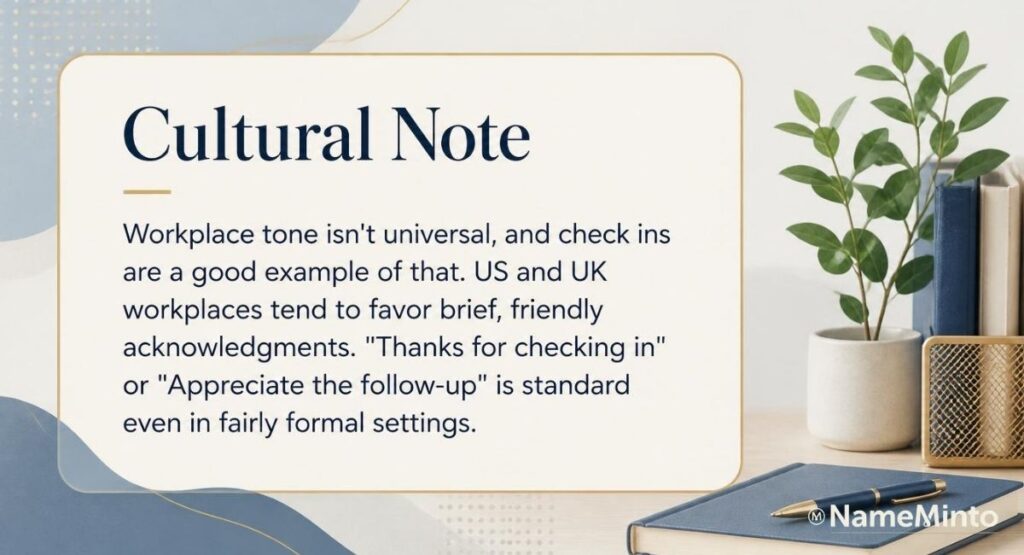
Workplace tone isn’t universal, and check ins are a good example of that.
US and UK workplaces tend to favor brief, friendly acknowledgments. “Thanks for checking in” or “Appreciate the follow-up” is standard even in fairly formal settings.
East Asian business cultures (Japan, South Korea, and similar) often expect more formal, respectful phrasing, even between colleagues. A phrase like “I appreciate your attention to this matter” translates better across that expectation than something casual.
South Asian and Middle Eastern workplaces often blend warmth with formality. Personal touches, like acknowledging someone’s thoughtfulness, are welcomed even in professional emails.
European workplaces (Germany, the Netherlands, and similar) tend to value directness over warmth. A short, clear “Thank you for following up” often works better than an elaborate response.
Quick rule: When emailing across cultures or with international clients, lean slightly more formal than you would locally. It rarely backfires, while being too casual sometimes does.
FAQs
Is “thanks for checking in” correct and professional?
Yes, it’s grammatically correct and works fine in most workplace settings. For clients or formal emails, though, a more specific phrase often sounds sharper.
What’s the most formal alternative?
“I appreciate your attention to this matter” is one of the most formal options on this list, ideal for senior leadership or official correspondence.
Which phrase works best for clients?
“I appreciate your follow-up” or “Thank you for your prompt attention” both strike the right balance of professional and personal for client emails.
What’s a good casual alternative?
“Thanks for checking on me” or “Appreciate you asking” work well for texts, Slack, or close coworkers.
Can I use these phrases in emails and texts both?
Yes, just match the tone to the medium. Save formal phrases for emails and casual ones for quick messages.
Should I always respond to a check in?
Yes, acknowledging it, even briefly, keeps the relationship professional and shows you value the person’s effort.
Is it okay to reuse the same phrase often?
Occasionally, yes, but rotating your phrasing keeps your communication from sounding automatic or scripted.
What’s a warm but still professional option?
“I’m grateful for your thoughtfulness” or “Thank you for keeping in touch” both add warmth without dropping professionalism.
Conclusion
“Thanks for checking in” gets the job done, but it’s not your only option. The right alternative depends on who’s asking, how formal the setting is, and what actually prompted their check in. Use the formal phrases for clients and leadership, keep it semi-formal with colleagues, and don’t be afraid to sound warm or casual when the relationship calls for it.
Bookmark this list, or better yet, save the templates above so you’re never stuck rewriting the same reply twice.
Have a specific email you’re stuck on? Drop the details in the comments, and we’ll help you find the right phrase.
Read Next : 40+ Professional & Formal Ways to Say “Thanks for the Heads Up” (2026 Guide)

Grant Ellison is an English language writer and editor with a passion for making grammar, word meanings, and everyday expressions easy to understand. He researches trusted language references and creates clear, accurate content that helps readers improve their English with confidence.
