

Quick Answer : It was a pleasure working with you” is a polite way to thank someone for a good working relationship but it gets overused fast. The best alternatives depend on your relationship and setting. Here are five you can use right now:
- I really enjoyed collaborating with you
- It was great partnering with you
- I’m grateful for the chance to work alongside you
- You’ve been great to work with
- It was a privilege working with you
Finding the right way to say “it was a pleasure working with you” can be trickier than it sounds. Say it too often and it starts to feel generic, use it in the wrong setting and it can come across as stiff or impersonal.
Whether you are wrapping up a project, saying goodbye to a team, or writing a LinkedIn recommendation, the right words make your gratitude feel genuine instead of automatic.
Below you will find over 70 fresh, natural ways to say it was a pleasure working with you, organized by situation so you can find the perfect line in seconds.
Is “It Was a Pleasure Working With You” Professional?
Yes, it’s fully professional. It works in emails, farewell messages, LinkedIn notes, and client communication. The phrase is polite, respectful, and appropriate for almost any workplace relationship.
The only downside is that it’s common. When you’ve sent it a dozen times this year, it can start to feel automatic rather than genuine. That’s when a fresh alternative helps you sound sincere instead of scripted.
Why Finding the Right Alternative Matters
The words you choose at the end of a project shape how people remember working with you. A specific, genuine phrase builds trust and strengthens the relationship, while a generic one can feel like an afterthought.
This matters most when you want future collaboration, a strong reference, or a solid professional network. The right closing line turns a routine goodbye into a lasting positive impression.
Comparison at a Glance
Formal
- It was a privilege working with you.
- I appreciated the opportunity to work with you.
- Our collaboration has been excellent.
Casual
- You’ve been great to work with.
- I really enjoyed collaborating with you.
- It’s been wonderful working with you.
Farewell
- I’ve truly enjoyed this working relationship.
- Thank you for being such a great collaborator.
- I hope we can work together again soon.
70+ Other Ways to Say “It Was a Pleasure Working With You”
After Completing a Project
1. I really enjoyed collaborating with you
- Meaning: You found the teamwork itself satisfying.
- Definition: A warm way to say the process, not just the outcome, was good.
- Detailed Explanation: This works well right after a deadline or deliverable, when you want to thank someone for how they worked, not just what they finished. It reads as sincere rather than routine.
- Scenario Example: “I really enjoyed collaborating with you on the launch. Let’s do it again soon.”
- Best Use: Coworkers or peers you worked closely with day to day.
- Tone: Warm, genuine, casual.
2. This project turned out great thanks to your input
- Meaning: You’re crediting their specific contribution to the result.
- Definition: A results focused thank you that names their impact.
- Detailed Explanation: Use this when someone’s ideas or work directly shaped the outcome. It’s more specific than a generic thank you, so it lands better.
- Scenario Example: “This project turned out great thanks to your input on the client deck.”
- Best Use: When you want to recognize a specific skill or decision.
- Tone: Appreciative, direct, professional.
3. I’m glad we got to work through this together
- Meaning: You valued having a partner through a difficult or complex task.
- Definition: An acknowledgment of shared effort, especially through challenges.
- Detailed Explanation: This fits projects that had rough patches. It signals you noticed their support during the hard parts, not just the finish line.
- Scenario Example: “I’m glad we got to work through this together. The last stretch wasn’t easy.”
- Best Use: Projects with tight deadlines or obstacles.
- Tone: Reassuring, honest, collegial.
4. Thanks for making this project run smoothly
- Meaning: You appreciate their reliability and efficiency.
- Definition: A compliment aimed at process and organization.
- Detailed Explanation: Good for project managers, coordinators, or anyone whose behind the scenes work kept things on track. It highlights competence over chemistry.
- Scenario Example: “Thanks for making this project run smoothly from start to finish.”
- Best Use: Operational or logistics focused collaborators.
- Tone: Practical, respectful, efficient.
5. It was great seeing this come together with you
- Meaning: You’re expressing satisfaction in the shared outcome.
- Definition: A phrase that celebrates the finished result as a joint win.
- Detailed Explanation: Use this at project wrap up meetings or in a closing email once the deliverable is complete. It feels celebratory without being overly emotional.
- Scenario Example: “It was great seeing this come together with you after all the planning.”
- Best Use: Final wrap up messages or closing meetings.
- Tone: Positive, satisfied, forward looking.
6. Your input made a real difference on this one
- Meaning: You’re acknowledging a measurable impact on the project.
- Definition: A specific compliment tied to results, not just effort.
- Detailed Explanation: This works best when you can point to something concrete, like a strategy shift or a fix that saved time. Specificity makes it feel earned.
- Scenario Example: “Your input made a real difference on this one, especially the timeline changes.”
- Best Use: Senior contributors or subject matter experts.
- Tone: Sincere, specific, respectful.
7. I appreciate everything you brought to this project
- Meaning: A broad thank you covering multiple contributions.
- Definition: An umbrella phrase for someone who helped in more than one way.
- Detailed Explanation: Good when one phrase can’t capture everything, such as ideas, effort, and support. It’s slightly more formal and works well in written communication.
- Scenario Example: “I appreciate everything you brought to this project, from strategy to execution.”
- Best Use: Cross functional collaborators or multi role contributors.
- Tone: Formal, comprehensive, sincere.
8. Working on this with you was a great experience
- Meaning: You’re summarizing the whole collaboration positively.
- Definition: A closing statement for the project as a complete experience.
- Detailed Explanation: This suits a final email or a short note attached to a deliverable. It wraps up the relationship for that project without implying future work.
- Scenario Example: “Working on this with you was a great experience. Thanks for everything.”
- Best Use: Standalone or one time projects.
- Tone: Warm, conclusive, professional.
When Leading a Team
1. I’m proud of what this team accomplished
- Meaning: You’re expressing pride in the group’s collective result.
- Definition: A leadership focused thank you that centers the team, not just you.
- Detailed Explanation: This works well in a wrap up email or team meeting after a milestone. It signals genuine leadership pride rather than a formal obligation to say thanks.
- Scenario Example: “I’m proud of what this team accomplished under a tight deadline.”
- Best Use: Managers closing out a project with their direct team.
- Tone: Proud, warm, motivating.
2. Leading this team has been a genuine pleasure
- Meaning: You valued the experience of managing this specific group.
- Definition: A personal reflection on the leadership experience itself.
- Detailed Explanation: Use this when you want to acknowledge the team as people, not just performance. It works especially well if this was a first time leadership role or a particularly strong group.
- Scenario Example: “Leading this team has been a genuine pleasure from day one.”
- Best Use: New managers or team leads reflecting on a project.
- Tone: Reflective, sincere, humble.
3. Thank you all for your hard work and trust
- Meaning: You’re acknowledging both effort and the confidence they placed in your leadership.
- Definition: A dual thank you covering performance and relationship.
- Detailed Explanation: This is useful when a team followed your direction through uncertainty or change. Naming “trust” makes it more personal than a standard thank you.
- Scenario Example: “Thank you all for your hard work and trust through this transition.”
- Best Use: Teams navigating change, restructuring, or a tough project.
- Tone: Grateful, humble, sincere.
4. Each of you brought something valuable to this project
- Meaning: You’re recognizing individual contributions within a group effort.
- Definition: A phrase that avoids generic group praise by implying specific value.
- Detailed Explanation: Good for a closing team message where you want everyone to feel individually seen, even in a group note. Pair it with a follow up mentioning one or two specifics if possible.
- Scenario Example: “Each of you brought something valuable to this project, and it showed in the result.”
- Best Use: Group emails or team closing meetings.
- Tone: Inclusive, appreciative, specific.
5. It’s been a privilege to lead this group
- Meaning: You feel honored by the leadership role and the team itself.
- Definition: A formal, respectful way to close out a leadership assignment.
- Detailed Explanation: This suits senior or higher stakes projects, such as leading a cross departmental initiative or a client facing team. It carries more weight than casual alternatives.
- Scenario Example: “It’s been a privilege to lead this group through such a demanding launch.”
- Best Use: Formal settings, senior leadership, or high visibility projects.
- Tone: Formal, respectful, honored.
6. I couldn’t have asked for a better team
- Meaning: You’re expressing that the team exceeded your expectations.
- Definition: A strong, personal compliment about team quality.
- Detailed Explanation: Use this when the group genuinely performed above what you expected, not as a routine closer. It reads as heartfelt because it’s a stronger claim than most alternatives.
- Scenario Example: “I couldn’t have asked for a better team for this launch.”
- Best Use: High performing teams after a successful outcome.
- Tone: Enthusiastic, genuine, warm.
7. Your dedication made this project a success
- Meaning: You’re crediting the team’s commitment as the reason for the win.
- Definition: A results oriented thank you tied directly to effort.
- Detailed Explanation: This works in more formal recognition contexts, like an all hands email or a note copied to upper management. It’s specific enough to feel earned rather than generic.
- Scenario Example: “Your dedication made this project a success despite the tight timeline.”
- Best Use: Formal recognition emails or leadership updates.
- Tone: Formal, appreciative, results focused.
8. I’m grateful to have worked alongside such a strong team
- Meaning: You’re positioning yourself as part of the team, not just its leader.
- Definition: A humble leadership phrase that flattens hierarchy slightly.
- Detailed Explanation: Good for leaders who want to sound collaborative rather than top down. It works especially well if you contributed hands on work alongside the team.
- Scenario Example: “I’m grateful to have worked alongside such a strong team on this one.”
- Best Use: Collaborative leadership styles or flatter team structures.
- Tone: Humble, warm, collaborative.
When Saying Goodbye / Leaving the Company
1. It’s been an honor working with you these past few years
- Meaning: You’re marking a long term relationship with respect and warmth.
- Definition: A farewell phrase suited to extended working relationships.
- Detailed Explanation: This fits when you’ve worked with someone for a significant stretch of time, not just one project. It carries more emotional weight than shorter alternatives, so save it for relationships that earned it.
- Scenario Example: “It’s been an honor working with you these past few years. I’ll miss our team.”
- Best Use: Long tenured coworkers or managers.
- Tone: Heartfelt, respectful, formal.
2. I’ll genuinely miss working with you
- Meaning: You’re expressing personal loss at the relationship ending.
- Definition: A direct, emotionally honest farewell line.
- Detailed Explanation: Use this for close coworkers where a more formal phrase would feel distant. It’s simple, but the sincerity comes through because it’s understated rather than dramatic.
- Scenario Example: “I’ll genuinely miss working with you. Let’s stay in touch.”
- Best Use: Close colleagues or work friends.
- Tone: Personal, warm, informal.
3. Wishing you the best in your next chapter
- Meaning: You’re focusing on their future rather than dwelling on the goodbye.
- Definition: A forward looking, positive send off.
- Detailed Explanation: This works well when someone is leaving for a new opportunity, not being let go. It keeps the tone upbeat and avoids making the departure feel heavy.
- Scenario Example: “Wishing you the best in your next chapter. You’ve earned it.”
- Best Use: Coworkers moving to a new job or company.
- Tone: Encouraging, positive, warm.
4. You’ve been an invaluable part of this team
- Meaning: You’re stating their contribution was essential, not just nice to have.
- Definition: A strong compliment about their overall impact.
- Detailed Explanation: Good for someone whose absence will genuinely be felt, such as a key contributor or subject matter expert. It reads as sincere because “invaluable” is a specific, strong word choice.
- Scenario Example: “You’ve been an invaluable part of this team, and we’ll feel your absence.”
- Best Use: Senior contributors or long term team members.
- Tone: Sincere, respectful, formal.
5. Thank you for everything you’ve taught me
- Meaning: You’re acknowledging their role as a mentor or guide.
- Definition: A farewell that centers your growth rather than their departure.
- Detailed Explanation: Use this when someone genuinely mentored you, whether formally or informally. It’s a humble, specific way to say goodbye that focuses on impact rather than sentiment alone.
- Scenario Example: “Thank you for everything you’ve taught me. I wouldn’t be where I am without it.”
- Best Use: Mentors, managers, or senior colleagues.
- Tone: Humble, grateful, personal.
6. I hope our paths cross again someday
- Meaning: You’re leaving the door open for a future relationship.
- Definition: A hopeful, low pressure way to close a professional chapter.
- Detailed Explanation: This suits situations where reconnecting is possible but not guaranteed, like an industry peer or client. It’s warm without promising anything specific.
- Scenario Example: “I hope our paths cross again someday. It’s been a pleasure.”
- Best Use: Industry contacts, clients, or occasional collaborators.
- Tone: Hopeful, warm, light.
7. It was a pleasure working alongside someone so dedicated
- Meaning: You’re complimenting their work ethic as the defining trait.
- Definition: A farewell that names a specific quality you admired.
- Detailed Explanation: Use this when dedication or effort stood out more than any single achievement. Naming the trait makes the compliment feel more considered than a generic goodbye.
- Scenario Example: “It was a pleasure working alongside someone so dedicated to getting things right.”
- Best Use: Hardworking colleagues or high effort team members.
- Tone: Respectful, specific, sincere.
8. This team won’t be the same without you
- Meaning: You’re stating the team will genuinely feel their absence.
- Definition: A strong, honest acknowledgment of their role in team dynamics.
- Detailed Explanation: Good for someone who shaped team culture, not just output. It’s a bigger statement, so use it when it’s true rather than as a routine farewell line.
- Scenario Example: “This team won’t be the same without you. Good luck out there.”
- Best Use: Team members central to culture or morale.
- Tone: Genuine, warm, slightly sentimental.
9. Thank you for being such a supportive colleague
- Meaning: You’re recognizing their role in helping you personally, not just the project.
- Definition: A farewell focused on personal support rather than output.
- Detailed Explanation: This fits someone who helped you through a hard stretch, answered questions, or backed you up. It’s simple but specific to the relationship rather than the work itself.
- Scenario Example: “Thank you for being such a supportive colleague, especially this past year.”
- Best Use: Peers who offered personal or professional support.
- Tone: Warm, appreciative, sincere.
10. It’s been a privilege to work with someone of your caliber
- Meaning: You’re complimenting their skill level as the standout quality.
- Definition: A formal farewell centered on professional respect.
- Detailed Explanation: Use this for senior professionals, experts, or anyone whose skill genuinely impressed you. It’s a more formal register, so it fits executive or client level farewells better than casual team goodbyes.
- Scenario Example: “It’s been a privilege to work with someone of your caliber. Best of luck ahead.”
- Best Use: Senior professionals, executives, or highly skilled peers.
- Tone: Formal, respectful, professional.
When Switching Departments or Roles
1. I’ll miss working with the team, but I’m excited for what’s next
- Meaning: You’re balancing genuine fondness with excitement about the change.
- Definition: A transition phrase that acknowledges both sides of the move.
- Detailed Explanation: This works well in a goodbye email to your current team when the move is internal and positive. It avoids sounding like you’re eager to leave while still being honest about looking forward.
- Scenario Example: “I’ll miss working with the team, but I’m excited for what’s next in marketing.”
- Best Use: Internal transfers or promotions within the same company.
- Tone: Warm, balanced, optimistic.
2. Thank you for helping me grow in this role
- Meaning: You’re crediting the team or manager with your development.
- Definition: A phrase that centers your growth rather than the goodbye itself.
- Detailed Explanation: Use this when a manager or team genuinely invested in your skills before you moved on. It’s a specific, humble way to say thanks that feels earned rather than generic.
- Scenario Example: “Thank you for helping me grow in this role over the past two years.”
- Best Use: Departing employees thanking a manager or mentor.
- Tone: Grateful, humble, sincere.
3. I hope we can still collaborate across teams
- Meaning: You want to keep working together in a new capacity.
- Definition: A forward looking phrase for internal moves that keep contact possible.
- Detailed Explanation: This fits when your new role might still overlap with your old team’s work. It signals you value the relationship enough to keep it going, even informally.
- Scenario Example: “I hope we can still collaborate across teams when our projects overlap.”
- Best Use: Internal moves within the same company or department cluster.
- Tone: Hopeful, professional, warm.
4. It’s been great being part of this department
- Meaning: You’re reflecting positively on your time in a specific team or unit.
- Definition: A simple, direct farewell tied to a department rather than individuals.
- Detailed Explanation: Good for a group message to an entire department when you’re moving elsewhere in the company. It’s broad enough to cover everyone without naming specific people.
- Scenario Example: “It’s been great being part of this department. Thanks for everything.”
- Best Use: Department wide farewell emails.
- Tone: Positive, simple, professional.
5. I’ve learned so much from this team, and I’m grateful for it
- Meaning: You’re acknowledging skill growth tied directly to the people, not the role.
- Definition: A reflective phrase that credits the team for your development.
- Detailed Explanation: Use this when specific coworkers taught you something you’ll carry into your new role. It reads as more personal than a generic “thanks for everything” line.
- Scenario Example: “I’ve learned so much from this team, and I’m grateful for it as I move on.”
- Best Use: Coworkers who directly mentored or trained you.
- Tone: Reflective, warm, sincere.
6. Even in my new role, I’ll carry what I learned here with me
- Meaning: You’re saying the experience will shape your future work.
- Definition: A phrase that ties past collaboration to future impact.
- Detailed Explanation: This suits a more reflective farewell note, especially if the move is a promotion or a meaningful step in your career. It shows the relationship had lasting value beyond the role itself.
- Scenario Example: “Even in my new role, I’ll carry what I learned here with me every day.”
- Best Use: Promotions or meaningful internal career moves.
- Tone: Reflective, sincere, forward looking.
When Emailing a Client or Customer
1. It’s been a pleasure serving your business
- Meaning: You’re framing the relationship in service oriented, client focused terms.
- Definition: A polished way to thank a client for their business.
- Detailed Explanation: This works in closing emails after a project, contract, or engagement ends. It keeps the tone professional and slightly formal, which suits most client relationships better than casual phrasing.
- Scenario Example: “It’s been a pleasure serving your business over the past quarter.”
- Best Use: Service providers, agencies, or vendors closing out an engagement.
- Tone: Professional, polished, formal.
2. Thank you for trusting us with this project
- Meaning: You’re acknowledging the client’s confidence in your work.
- Definition: A phrase that centers trust rather than just the transaction.
- Detailed Explanation: Use this after delivering a project or completing a milestone. Naming “trust” specifically makes it feel more meaningful than a generic thank you, especially for high stakes or high budget work.
- Scenario Example: “Thank you for trusting us with this project. We’re proud of the result.”
- Best Use: Agencies, consultants, or contractors after project delivery.
- Tone: Grateful, professional, sincere.
3. We’ve truly valued this partnership
- Meaning: You’re framing the relationship as a partnership, not just a client account.
- Definition: A phrase that elevates the tone from transactional to collaborative.
- Detailed Explanation: This fits ongoing or long term client relationships rather than one off projects. It suggests mutual respect and positions the client as a collaborator, which can help with retention.
- Scenario Example: “We’ve truly valued this partnership and everything we’ve built together.”
- Best Use: Long term or retainer based client relationships.
- Tone: Warm, professional, relationship focused.
4. It’s been great working through this with you
- Meaning: You’re acknowledging the process, including any challenges along the way.
- Definition: A phrase that credits the collaboration itself, not just the outcome.
- Detailed Explanation: Use this when a project had back and forth, revisions, or problem solving involved. It shows you noticed their engagement, not just the final sign off.
- Scenario Example: “It’s been great working through this with you, especially the last round of changes.”
- Best Use: Projects with heavy client collaboration or iteration.
- Tone: Genuine, professional, collaborative.
5. We appreciate your clear communication throughout this project
- Meaning: You’re complimenting a specific, practical quality rather than a vague trait.
- Definition: A targeted thank you focused on communication style.
- Detailed Explanation: Good for clients who were responsive, organized, or easy to work with. Naming the specific behavior makes the compliment feel earned and encourages them to keep working that way in future projects.
- Scenario Example: “We appreciate your clear communication throughout this project. It made everything easier.”
- Best Use: Clients who were responsive or well organized.
- Tone: Practical, appreciative, professional.
6. Thank you for being such a pleasure to work with
- Meaning: You’re complimenting their overall demeanor and working style.
- Definition: A warm, general compliment about the client relationship itself.
- Detailed Explanation: This suits a friendly but still professional closing line, especially for smaller clients or long standing accounts. It’s simple, but the specificity of “such a pleasure” keeps it from sounding generic.
- Scenario Example: “Thank you for being such a pleasure to work with. We hope to collaborate again.”
- Best Use: Friendly, established client relationships.
- Tone: Warm, friendly, professional.
7. We’re grateful for the opportunity to work on this with you
- Meaning: You’re expressing gratitude for being chosen for the project.
- Definition: A humble phrase that acknowledges the client’s decision to hire or partner with you.
- Detailed Explanation: Use this for competitive projects or new clients where you want to acknowledge that they chose you specifically. It works well in proposal follow ups or project closing emails alike.
- Scenario Example: “We’re grateful for the opportunity to work on this with you and hope to earn more in the future.”
- Best Use: New clients or competitively won projects.
- Tone: Humble, grateful, professional.
8. It’s always a pleasure doing business with your team
- Meaning: You’re addressing the client’s whole team, not just one contact.
- Definition: A broader thank you suited to multi person client relationships.
- Detailed Explanation: This fits when you worked with several people on the client side, not just one point of contact. It acknowledges the collective effort without singling anyone out.
- Scenario Example: “It’s always a pleasure doing business with your team. Thanks for another successful project.”
- Best Use: Client accounts with multiple stakeholders.
- Tone: Professional, warm, formal.
When Writing a LinkedIn Message/Recommendation
1. I had the pleasure of working with someone truly talented
- Meaning: You’re opening a recommendation by highlighting their skill first.
- Definition: A strong opening line for a LinkedIn recommendation post.
- Detailed Explanation: This works well as the first sentence of a written recommendation, since it sets an immediately positive tone before you get into specifics. Follow it with one or two concrete examples of their skill.
- Scenario Example: “I had the pleasure of working with someone truly talented during our time on the product team.”
- Best Use: Opening lines of LinkedIn recommendations.
- Tone: Enthusiastic, professional, complimentary.
2. Their professionalism and skill made every project easier
- Meaning: You’re naming two specific strengths rather than a vague compliment.
- Definition: A results focused endorsement tied to concrete traits.
- Detailed Explanation: Use this in the body of a recommendation, after your opening line, to back up your praise with something specific. Naming both professionalism and skill covers character and competence in one line.
- Scenario Example: “Their professionalism and skill made every project easier, even under tight deadlines.”
- Best Use: Middle section of a written recommendation.
- Tone: Specific, professional, sincere.
3. I’d work with them again without hesitation
- Meaning: You’re giving the strongest possible endorsement of future collaboration.
- Definition: A closing line that signals full confidence in the person.
- Detailed Explanation: This works best as a closing statement in a recommendation or endorsement message. It’s a strong, unambiguous claim, so only use it when it’s genuinely true.
- Scenario Example: “I’d work with them again without hesitation and recommend them to any team.”
- Best Use: Closing line of a recommendation.
- Tone: Confident, sincere, strong.
4. It was a genuine privilege to collaborate with them
- Meaning: You’re expressing that the working relationship was an honor, not just a task.
- Definition: A formal, respectful phrase for a public professional endorsement.
- Detailed Explanation: Use this for senior colleagues, mentors, or people whose expertise you specifically admired. The word “privilege” carries more formal weight than most alternatives, so save it for people who earned it.
- Scenario Example: “It was a genuine privilege to collaborate with them on our biggest launch of the year.”
- Best Use: Senior professionals or mentors.
- Tone: Formal, respectful, sincere.
5. Their work consistently exceeded expectations
- Meaning: You’re making a performance based claim rather than a personality based one.
- Definition: A results driven line suited to skills endorsements.
- Detailed Explanation: This fits recommendations focused on output and quality, especially for technical or specialist roles. It’s a measurable claim, so it reads as credible rather than just friendly.
- Scenario Example: “Their work consistently exceeded expectations on every deliverable we tackled together.”
- Best Use: Technical, specialist, or performance based roles.
- Tone: Professional, results focused, credible.
6. I’m grateful to have had them as a colleague
- Meaning: You’re framing the endorsement around personal appreciation, not just skill.
- Definition: A warmer, more personal recommendation opener or closer.
- Detailed Explanation: Use this when the relationship felt personal, not just transactional. It’s a good fit for peers or close coworkers rather than someone you managed from a distance.
- Scenario Example: “I’m grateful to have had them as a colleague throughout my time at the company.”
- Best Use: Peer to peer recommendations.
- Tone: Warm, personal, grateful.
7. They brought both skill and integrity to everything they touched
- Meaning: You’re combining a competence compliment with a character compliment.
- Definition: A two part endorsement covering ability and ethics.
- Detailed Explanation: Good for recommendations where trust mattered as much as talent, such as client facing or leadership roles. Pairing skill with integrity makes the endorsement feel well rounded rather than one dimensional.
- Scenario Example: “They brought both skill and integrity to everything they touched, which made them easy to trust.”
- Best Use: Leadership or client facing roles.
- Tone: Respectful, balanced, sincere.
8. Any team would be lucky to have them
- Meaning: You’re making a broad, confident recommendation for future employers or teams.
- Definition: A strong closing endorsement aimed at whoever reads the recommendation next.
- Detailed Explanation: This works as a final line, especially when writing for someone job hunting or seeking new opportunities. It speaks directly to the reader, not just about the person, which makes it persuasive.
- Scenario Example: “Any team would be lucky to have them, and I say that with full confidence.”
- Best Use: Closing line for job seekers’ recommendations.
- Tone: Confident, warm, persuasive.
Formal Alternatives for Senior Professionals
1. It has been an honor to work alongside you
- Meaning: You’re expressing deep respect, elevated above standard gratitude.
- Definition: A formal phrase reserved for high level or highly respected professionals.
- Detailed Explanation: This suits executives, board members, or senior leaders whose experience you specifically admire. Reserve it for genuine cases, since overusing “honor” dilutes its weight.
- Scenario Example: “It has been an honor to work alongside you on this initiative.”
- Best Use: Executives, senior leadership, or highly respected mentors.
- Tone: Formal, respectful, elevated.
2. I’ve greatly valued your guidance throughout this process
- Meaning: You’re crediting them specifically for direction and mentorship.
- Definition: A formal phrase centered on leadership and advice, not just teamwork.
- Detailed Explanation: Use this when someone actively guided decisions rather than simply collaborating as an equal. It positions them as a mentor figure, which fits senior or supervisory relationships well.
- Scenario Example: “I’ve greatly valued your guidance throughout this process, especially during the final review.”
- Best Use: Managers, supervisors, or senior advisors.
- Tone: Respectful, formal, appreciative.
3. Your expertise elevated this project significantly
- Meaning: You’re crediting their specific knowledge for improving the outcome.
- Definition: A performance based formal compliment tied to expertise.
- Detailed Explanation: This works well when addressing a specialist or subject matter expert whose input clearly changed the direction or quality of the work. It’s specific enough to avoid sounding like flattery.
- Scenario Example: “Your expertise elevated this project significantly, particularly in the technical review stage.”
- Best Use: Subject matter experts or technical leads.
- Tone: Formal, precise, respectful.
4. I have deep respect for the way you approach your work
- Meaning: You’re complimenting their professional character, not just their output.
- Definition: A formal statement about work ethic and approach.
- Detailed Explanation: Use this for senior professionals whose discipline or method stood out, not just their results. It works well in written recommendations or formal farewell notes.
- Scenario Example: “I have deep respect for the way you approach your work, and it shows in everything you deliver.”
- Best Use: Senior professionals with a distinct working style.
- Tone: Formal, admiring, sincere.
5. Working under your leadership has been a valuable experience
- Meaning: You’re addressing a superior specifically in their leadership capacity.
- Definition: A formal thank you aimed at someone in a direct authority role.
- Detailed Explanation: This fits when writing to a manager or director you reported to. It acknowledges hierarchy respectfully while still expressing genuine appreciation for what you gained.
- Scenario Example: “Working under your leadership has been a valuable experience I won’t forget.”
- Best Use: Direct managers or department heads.
- Tone: Formal, respectful, appreciative.
6. I’ve come away from this collaboration with tremendous respect for your work
- Meaning: You’re stating the collaboration changed or reinforced your professional opinion of them.
- Definition: A reflective, formal closing statement about earned respect.
- Detailed Explanation: Use this when the working relationship genuinely shifted how you view their expertise. It reads as thoughtful rather than automatic, which suits high level professional correspondence.
- Scenario Example: “I’ve come away from this collaboration with tremendous respect for your work and judgment.”
- Best Use: Cross functional senior collaborators or executives.
- Tone: Reflective, formal, sincere.
7. Your professionalism set the standard for this entire project
- Meaning: You’re positioning them as the benchmark others should follow.
- Definition: A strong formal compliment about conduct and standards.
- Detailed Explanation: This fits situations where their conduct genuinely stood out compared to others involved. It’s a bold claim, so use it selectively for people who truly earned that distinction.
- Scenario Example: “Your professionalism set the standard for this entire project from day one.”
- Best Use: High performing senior contributors or team leads.
- Tone: Formal, strong, respectful.
8. I’m sincerely grateful for the opportunity to collaborate with you
- Meaning: You’re expressing formal gratitude for the chance itself, not just the outcome.
- Definition: A polished, slightly elevated version of a standard thank you.
- Detailed Explanation: Use this in formal emails or closing letters to senior contacts where you want warmth without informality. The word “sincerely” adds weight without sounding stiff.
- Scenario Example: “I’m sincerely grateful for the opportunity to collaborate with you on this initiative.”
- Best Use: Formal emails to senior contacts or executives.
- Tone: Formal, sincere, polished.
9. Your insight consistently shaped this project for the better
- Meaning: You’re crediting their judgment as a recurring, ongoing influence.
- Definition: A formal compliment about sustained impact rather than a single contribution.
- Detailed Explanation: This suits longer engagements where someone’s input mattered repeatedly, not just once. It signals that their value was consistent, which carries more weight than a one time compliment.
- Scenario Example: “Your insight consistently shaped this project for the better at every stage.”
- Best Use: Long term senior collaborators or advisors.
- Tone: Formal, respectful, specific.
10. It has been a distinct privilege to work with someone of your standing
- Meaning: You’re explicitly acknowledging their seniority or reputation.
- Definition: The most formal option, reserved for high profile or highly respected figures.
- Detailed Explanation: Use this sparingly, for executives, industry leaders, or people whose reputation precedes them. It’s the most elevated phrase in this list, so it should match a genuinely significant relationship.
- Scenario Example: “It has been a distinct privilege to work with someone of your standing in this field.”
- Best Use: Executives, industry leaders, or high profile professionals.
- Tone: Formal, elevated, respectful.
Casual Alternatives for Coworkers
1. It was awesome working with you
- Meaning: A relaxed, upbeat way to say thanks for teamwork
- Definition: A casual everyday phrase suited for peer to peer messages
- Explanation: Fits Slack messages, quick emails, or verbal chats with teammates you work closely with
- Scenario Example: “It was awesome working with you on the launch, seriously fun project”
- Best Use: Everyday coworker chats or team channels
- Tone: Friendly, upbeat, informal
2. Loved teaming up with you on this
- Meaning: You enjoyed the collaboration on a specific task
- Definition: A casual phrase highlighting the joint effort rather than just the person
- Explanation: Works well when referring to a shared project rather than a general working relationship
- Scenario Example: “Loved teaming up with you on this, we made a great pair”
- Best Use: Project specific shoutouts to teammates
- Tone: Warm, casual, energetic
3. You made this project so much easier
- Meaning: A practical compliment about their contribution
- Definition: A results based casual phrase focused on ease and support
- Explanation: Good for thanking someone who solved problems or reduced your workload
- Scenario Example: “You made this project so much easier, thanks for always being ready to help”
- Best Use: Coworkers who provided practical support
- Tone: Grateful, casual, sincere
4. Seriously appreciate having you on the team
- Meaning: A direct, casual expression of gratitude toward a teammate
- Definition: A personal appreciation phrase suited for informal settings
- Explanation: Works in team messages, group chats, or quick verbal thanks
- Scenario Example: “Seriously appreciate having you on the team, you always show up for us”
- Best Use: General team appreciation messages
- Tone: Genuine, casual, warm
5. This was a fun project to work on with you
- Meaning: You’re highlighting enjoyment over formality
- Definition: A light, casual phrase for positive shared experiences
- Explanation: Best when the project itself was genuinely enjoyable, not just productive
- Scenario Example: “This was a fun project to work on with you, let’s do it again sometime”
- Best Use: Creative or informal team projects
- Tone: Playful, relaxed, positive
6. You’re great to work with, always
- Meaning: A simple, direct compliment about their working style
- Definition: A short casual endorsement usable anytime
- Explanation: Works as a quick message or verbal comment without needing much context
- Scenario Example: “You’re great to work with, always on top of things”
- Best Use: Quick informal compliments
- Tone: Simple, sincere, casual
7. Thanks for being such a solid teammate
- Meaning: You’re recognizing reliability specifically
- Definition: A casual phrase focused on dependability
- Explanation: Good for coworkers who consistently show up and deliver, not just one time help
- Scenario Example: “Thanks for being such a solid teammate through this whole project”
- Best Use: Reliable, consistent coworkers
- Tone: Appreciative, casual, direct
8. Working with you was honestly a highlight
- Meaning: A stronger casual compliment about the experience
- Definition: A phrase that elevates the relationship above routine teamwork
- Explanation: Use this when the working relationship stood out compared to others
- Scenario Example: “Working with you was honestly a highlight of this whole project”
- Best Use: Close coworkers or standout collaborations
- Tone: Warm, casual, heartfelt
9. Glad we got to work on this together
- Meaning: A simple, low pressure way to close out a shared task
- Definition: A neutral casual phrase suited for wrap up messages
- Explanation: Works well at the end of a project when you want something short and easy
- Scenario Example: “Glad we got to work on this together, nice wrap up to the quarter”
- Best Use: End of project messages
- Tone: Easygoing, casual, friendly
10. You always bring good energy to the team
- Meaning: A compliment about attitude rather than output
- Definition: A casual phrase focused on personality and morale
- Explanation: Fits coworkers known for keeping the team positive, not just productive
- Scenario Example: “You always bring good energy to the team, it makes a difference”
- Best Use: Coworkers known for positivity or morale
- Tone: Light, appreciative, casual
11. It’s been great having you around
- Meaning: A general, informal way to acknowledge someone’s presence and contribution
- Definition: A broad casual phrase not tied to one specific project
- Explanation: Works well for ongoing teammates rather than a single task based collaboration
- Scenario Example: “It’s been great having you around, you’ve made the team better”
- Best Use: General team farewells or check ins
- Tone: Friendly, casual, genuine
12. Thanks for making this project less stressful
- Meaning: You’re crediting them for reducing pressure or workload
- Definition: A casual, honest phrase about practical emotional impact
- Explanation: Good for high pressure projects where their support genuinely helped you cope
- Scenario Example: “Thanks for making this project less stressful, I couldn’t have done it without you”
- Best Use: High pressure or deadline heavy projects
- Tone: Honest, casual, appreciative
Ready to Use Email Templates
Client Thank You Email
Subject: Thank You for a Great Collaboration
Hi [Client Name],
I just wanted to take a moment to say thank you. It was a pleasure working with you on [project name], and I really appreciated how smoothly our communication and collaboration went throughout the process.
Your input made a real difference in how the project came together, and I’m grateful for the trust you placed in our team. I hope we get the chance to work together again soon.
Wishing you continued success.
Warm regards, [Your Name]
Farewell Email to Team
Subject: Saying Goodbye and Thank You
Hi team,
As I move on from [company name], I wanted to take a moment to thank each of you. Working alongside this team has genuinely been one of the highlights of my career, and I’ll carry the lessons and memories from this experience with me.
Thank you for your support, your patience, and for making even the busiest weeks feel manageable. I’m proud of what we built together.
Please stay in touch, and I wish you all continued success ahead.
Best, [Your Name]
LinkedIn Recommendation Message
Hi [Name],
I wanted to reach out and say it was truly a pleasure working with you during our time on [project or team name]. Your professionalism and skill made a real impact, and I learned a lot from collaborating with you.
I’d be glad to write you a recommendation on LinkedIn if that would be helpful, and I hope our paths cross again in the future.
Best wishes, [Your Name]
How to Reply When Someone Says This to You
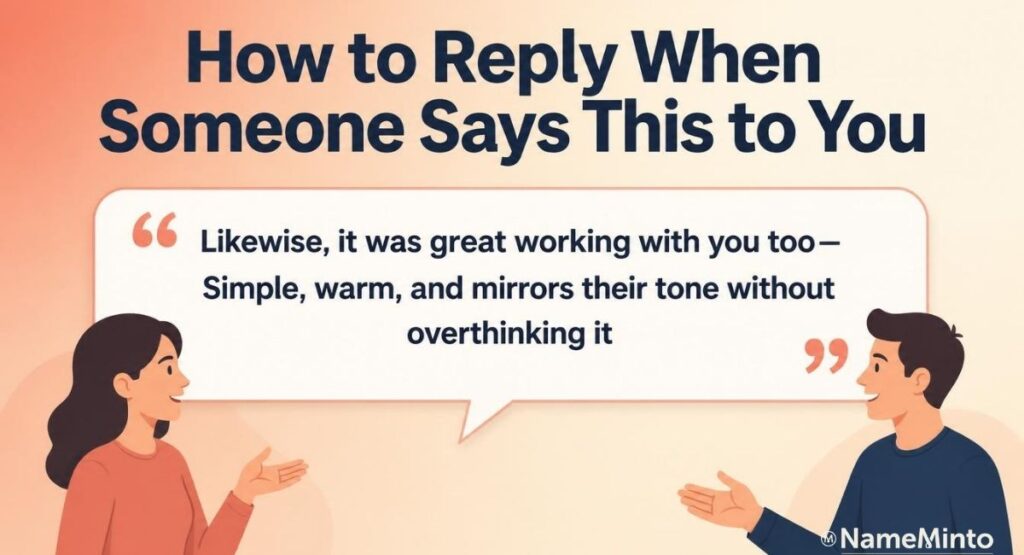
This is one of the most overlooked parts of workplace communication. Most people know how to say thank you, but freeze slightly when someone says it to them first. Here are natural, professional ways to respond depending on the situation.
When a Colleague Says It to You
Reply Option 1 • “Likewise, it was great working with you too” • Simple, warm, and mirrors their tone without overthinking it
Reply Option 2 • “Same here, I really enjoyed collaborating with you on this” • Adds a personal touch by referencing the shared work
Reply Option 3 • “Thanks, I feel the same way, hope we get to work together again soon” • Keeps the door open for future collaboration
When Your Manager or a Senior Professional Says It to You
Reply Option 1 • “Thank you, I really appreciate you saying that, it meant a lot working under your guidance” • Acknowledges their seniority respectfully
Reply Option 2 • “That means a lot coming from you, thank you for the opportunity” • Slightly more formal, fits hierarchy well
Reply Option 3 • “I appreciate that, I learned a great deal from this experience” • Shifts focus to growth, which reads well professionally
When a Client Says It to You
Reply Option 1 • “Thank you, it was a pleasure working with you as well, looking forward to future opportunities” • Keeps the relationship open for future business
Reply Option 2 • “I appreciate that, our team really enjoyed working on this project with you” • Reflects positively on the whole team, not just you
Reply Option 3 • “Thank you for the kind words, we’re glad we could deliver a great outcome together” • Ties the compliment back to results
When It Comes Through Email or LinkedIn (Written Reply)
Reply Option 1 • “Thank you so much for saying that, it truly was a great experience working with you” • Natural written tone, slightly warmer than spoken replies
Reply Option 2 • “I appreciate you taking the time to say that, it meant a lot” • Works well for LinkedIn messages or recommendation threads
Reply Option 3 • “Likewise, I really valued our collaboration and hope to stay in touch” • Good closing line for professional written exchanges
Frequently Asked Questions
Is “It Was a Pleasure Working With You” too formal for everyday use?
It works fine in most professional settings, but casual alternatives fit better for close coworkers or informal chats.
What’s a more casual way to say it?
Try phrases like “loved teaming up with you” or “it was awesome working with you” for a relaxed tone.
How do you say it in a text message?
Keep it short and warm, such as “really enjoyed working with you, let’s stay in touch.”
What to say instead in a farewell email?
Use something like “it’s been an honor being part of this team, thank you for everything.”
Is it okay to say this to your boss?
Yes, especially with a formal version like “working under your leadership has been a valuable experience.”
What’s the best way to phrase it on LinkedIn?
Open with something specific, like “I had the pleasure of working with someone truly talented,” then add one detail about their skills.
Can this phrase be used in a client email?
Yes, it works well when paired with a specific mention of the project or outcome achieved together.
Is there a more unique way to say it than the common phrase?
Yes, options like “this collaboration was genuinely rewarding” or “working with you was a real highlight” sound fresher.
Final Tips: Choosing the Right Phrase
- Match the tone to the relationship, formal for clients and seniors, casual for close teammates
- Keep it specific, mention the project or skill instead of a generic compliment
- Save stronger words like “honor” or “privilege” for people who truly earned them
- Use written versions for email and LinkedIn, spoken versions for meetings and calls
- When in doubt, shorter and sincere always beats long and generic
Read Next : 45+ Best Ways to Say ‘Thank You for Your Assistance in This Matter’ (Formal & Casual Examples)

Grant Ellison is an English language writer and editor with a passion for making grammar, word meanings, and everyday expressions easy to understand. He researches trusted language references and creates clear, accurate content that helps readers improve their English with confidence.
